CNC Milling
Flat, square and where the drawing says it should be.
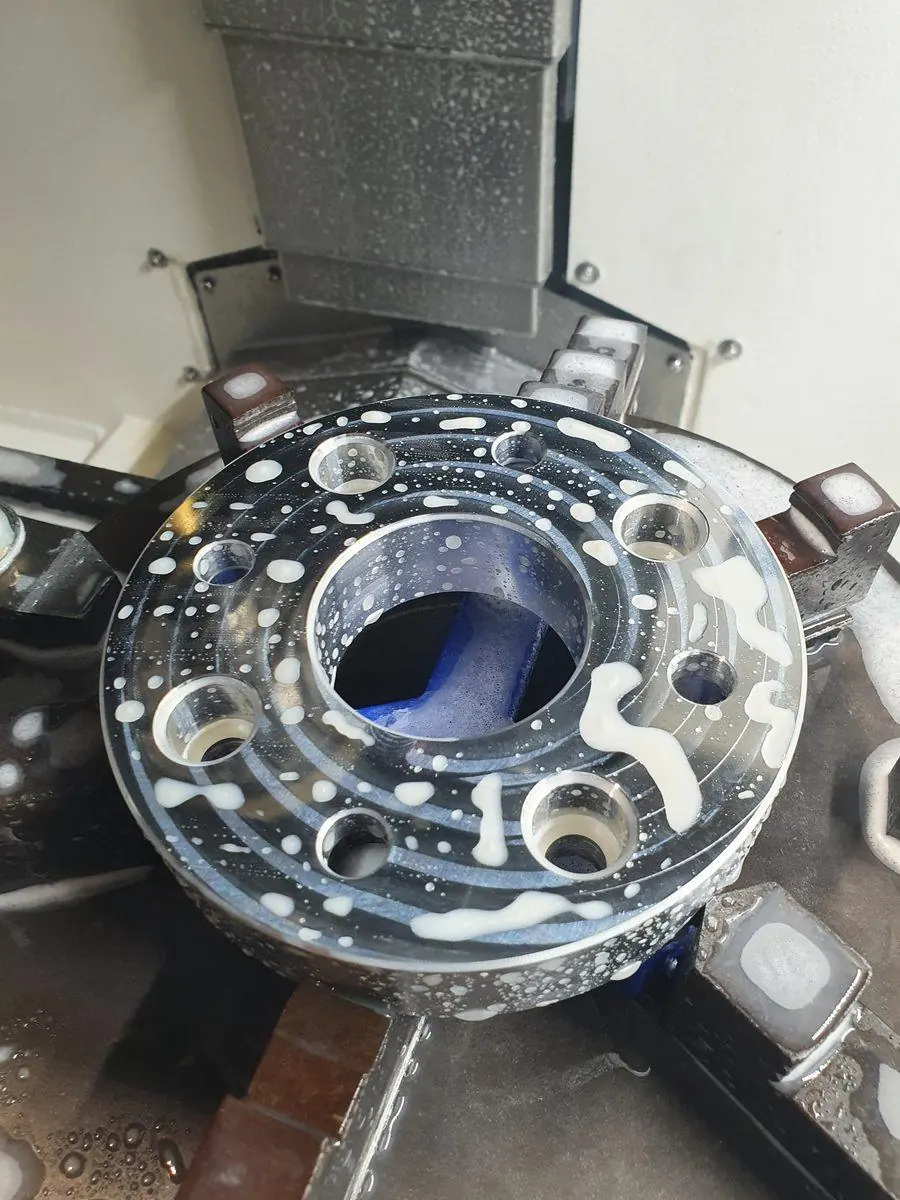
CNC milling covers everything that is not round: plates, blocks, housings, brackets, fixtures and anything that needs holes, slots, pockets or faces machined to position.
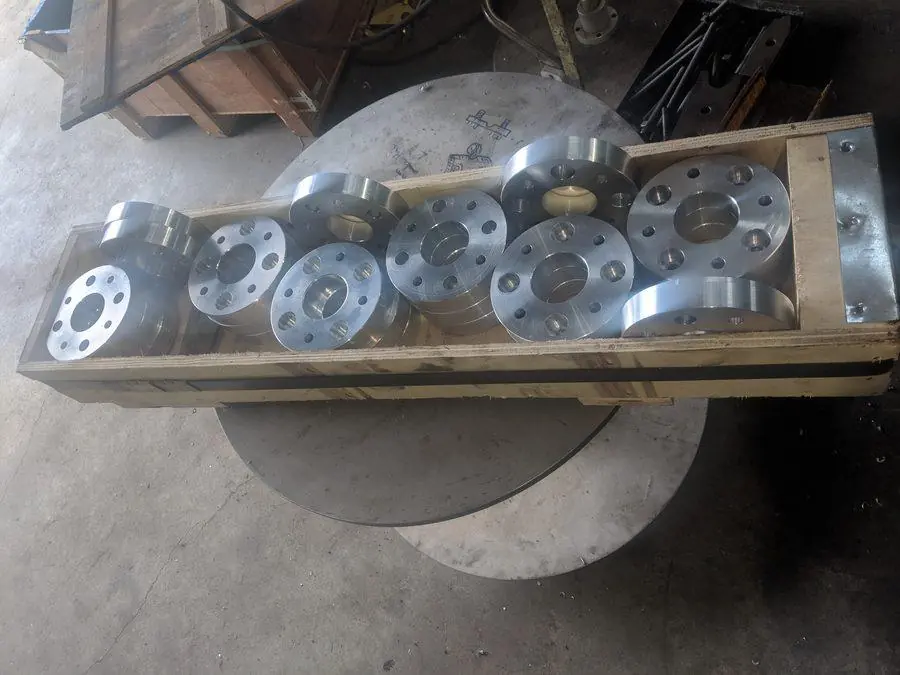
What we mill
- Plates and mounting brackets — drilled, tapped and machined to a bolt pattern that lines up
- Bearing housings and carriers — bored to size for a proper press or slip fit
- Machine components — clamps, guides, stops, hold-downs, spacers, wear plates
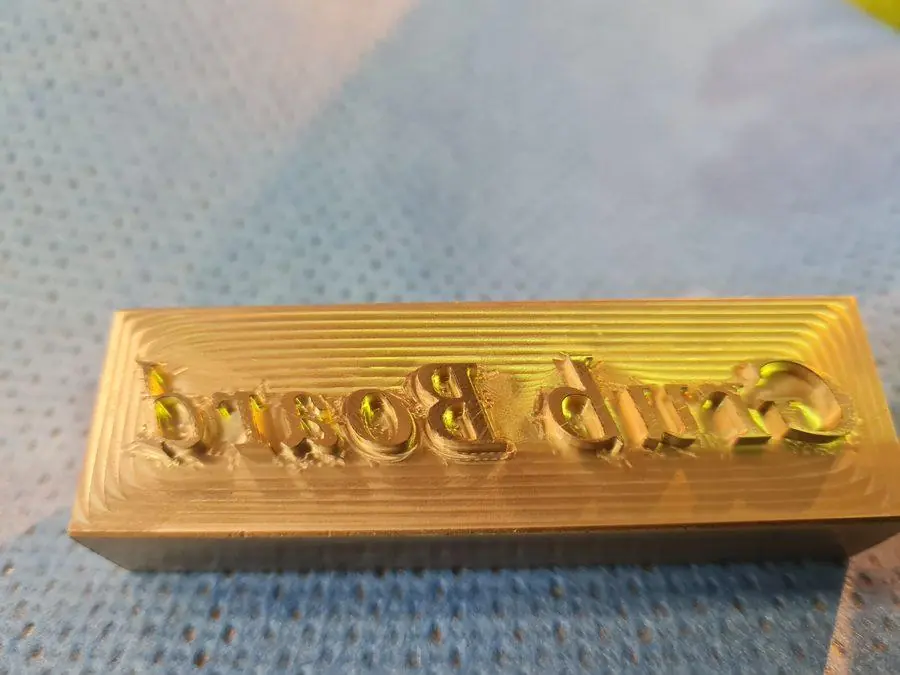
- Die bodies and tooling — the milled half of the crimping die work we run in batches
- Jigs and fixtures — for your production line or for our own machines
- Keyways, slots and cross-holes — including features added to parts we have turned
- Faced and squared blocks — stock cut, machined flat and square, ready for you to work with
- Engraving and part marking — part numbers, serial numbers, logos cut into the part
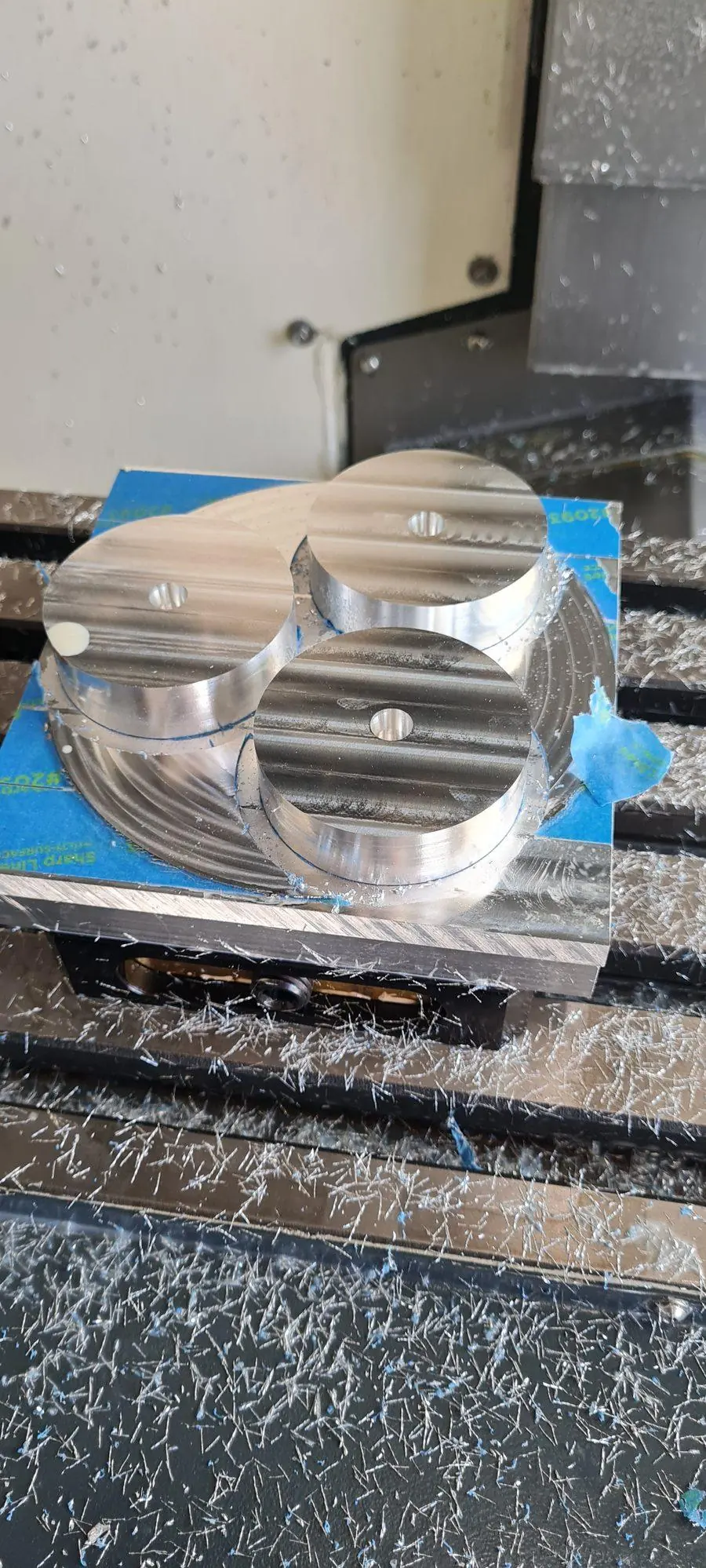
Steel, stainless and aluminium
We mill 4140 heat-treated for parts that take load, tool steels for tooling and wear components, 316 stainless for marine and washdown work, and aluminium where weight matters — brackets, housings, prototypes and fixtures.
Aluminium is also our fastest material to turn around. If you are prototyping and the part does not need to be steel, say so and we will usually get it back to you sooner and cheaper.
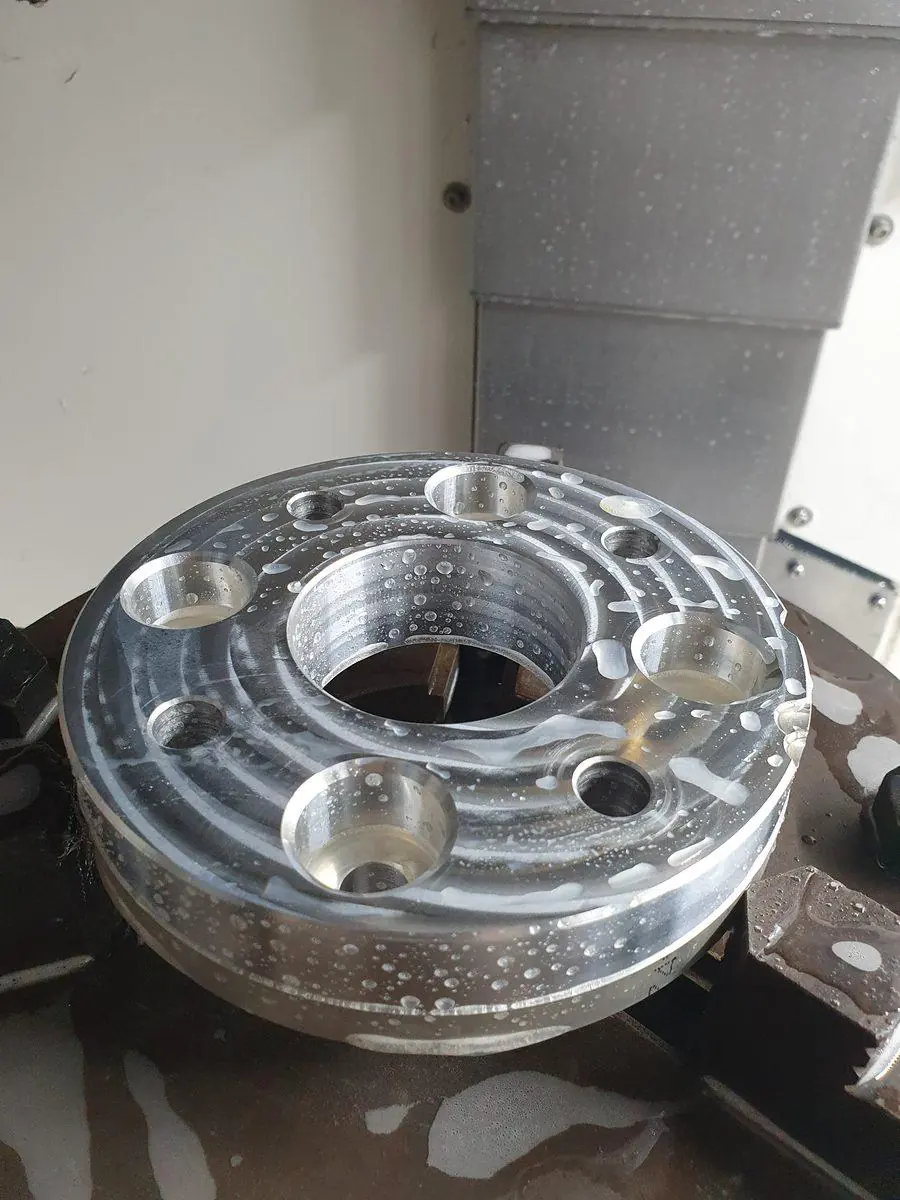
From a drawing, a sample, or an idea
Send a STEP file and we will go straight to CAM. Send a PDF drawing and we will model it. Send a photo, a sketch, or the broken bracket you pulled off the machine this morning, and we will measure it, model it in Fusion 360 and cut a new one.
Reverse engineering a milled part from a physical sample is routine work here — see industrial design and CAD.
Capacity
The large machining centre has 1000 × 500 × 500mm of travel; the small one 400 × 300 × 300mm; the manual mill 1000 × 500 × 400mm. A 3 tonne forklift gets heavy plate onto the table. If your part is bigger than a metre in its longest direction, ring — plenty of long parts can be done in two setups.
Second operations and mixed jobs
Plenty of parts need turning and milling. We will turn the diameter, then move it to the mill for the keyway, the flats and the cross-holes, without the part leaving the building or the job going to a second shop and coming back a fortnight later.
Batches milled overnight
Once a milled part is programmed and fixtured, it can run unattended. That is how we keep repeat batch work priced sensibly and delivered on the date we promised. If you have a milled component you order over and over, that is exactly the work our shop is set up for — production machining.
Prototype it before you cut it
We run a 3D printer (Ender 5 Pro) and a CNC router (Onefinity Journeyman X-50). For a fitment-critical part, printing a plastic version first to check clearances costs almost nothing and can save a full billet of aluminium and a day of machine time. We will suggest it when it makes sense.
Send your drawing, STEP file or a photo of the part and we will quote it. Ring 0478 790 631. Get a quote →