Timber slab and reclaimed hardwood work
A slab that has been sitting in a shed for ten years is never flat. It cups, it twists, and no amount of belt sanding gets it true. The router does, in one pass across the whole face.
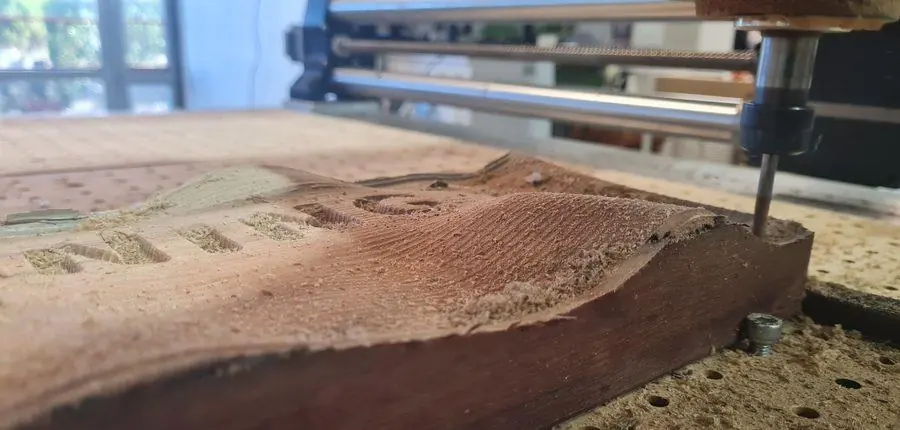
We flatten, profile and shape timber slabs and reclaimed hardwood on the CNC router at Salamander Bay.
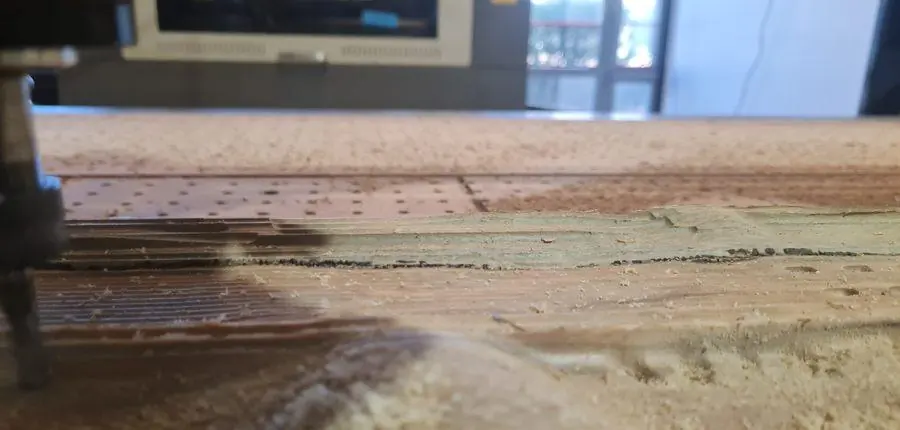
What we do to slabs and beams
- Flattening — both faces cut true and parallel, the whole surface referenced off the one setup
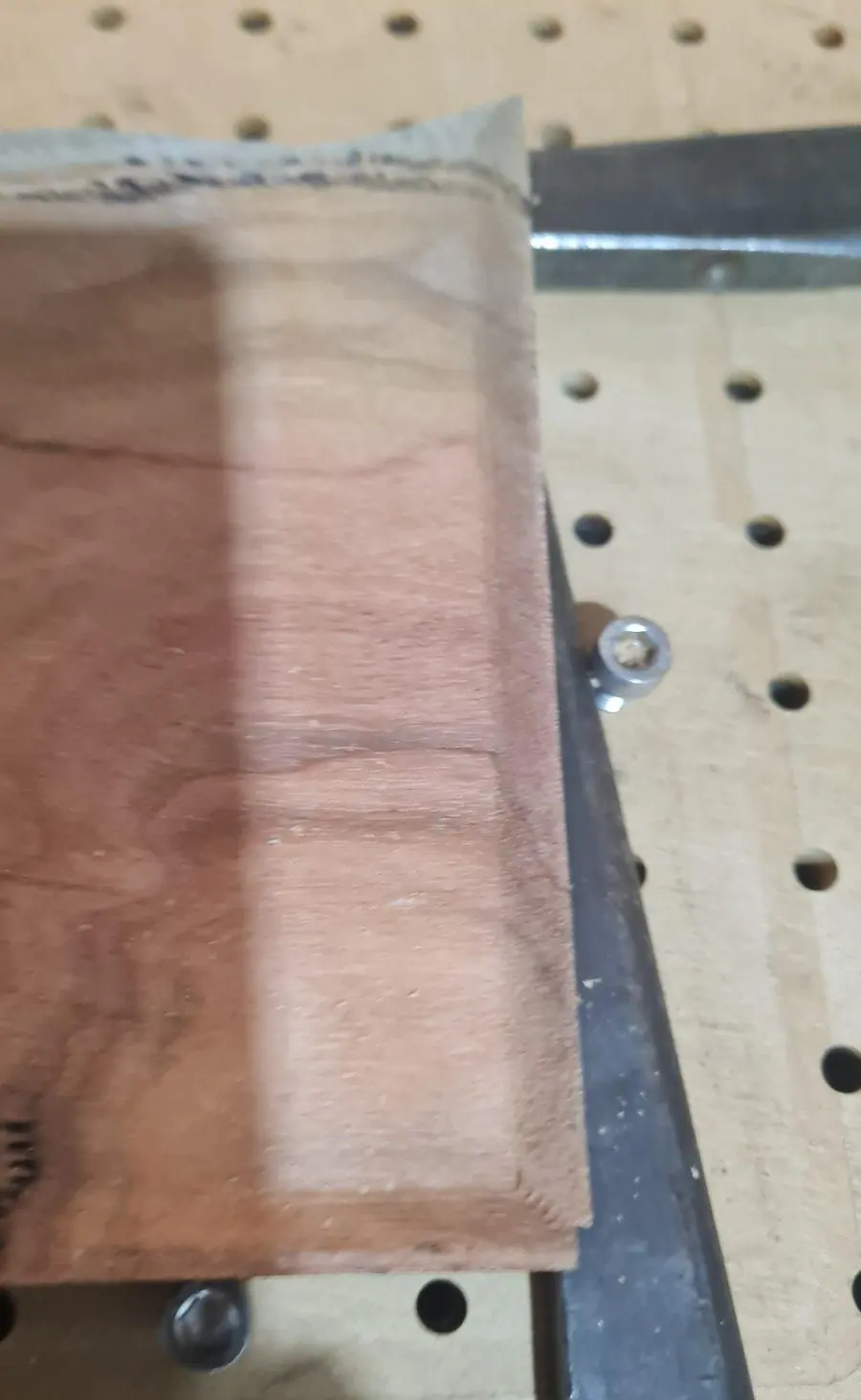
- Edge profiling — curved and shaped edges cut to a model, repeatable down the length
- Shaping to size — cut to an outline, straight or curved, square or waney
- Thicknessing — taken down to a finished thickness across the full width, wider than any thicknesser will take
- Recesses and inlays — pockets for resin fill, epoxy rivers, inlaid metal or contrasting timber
- Joinery cuts — bow-tie and butterfly key pockets across a check, dowel and bolt holes for legs and bases
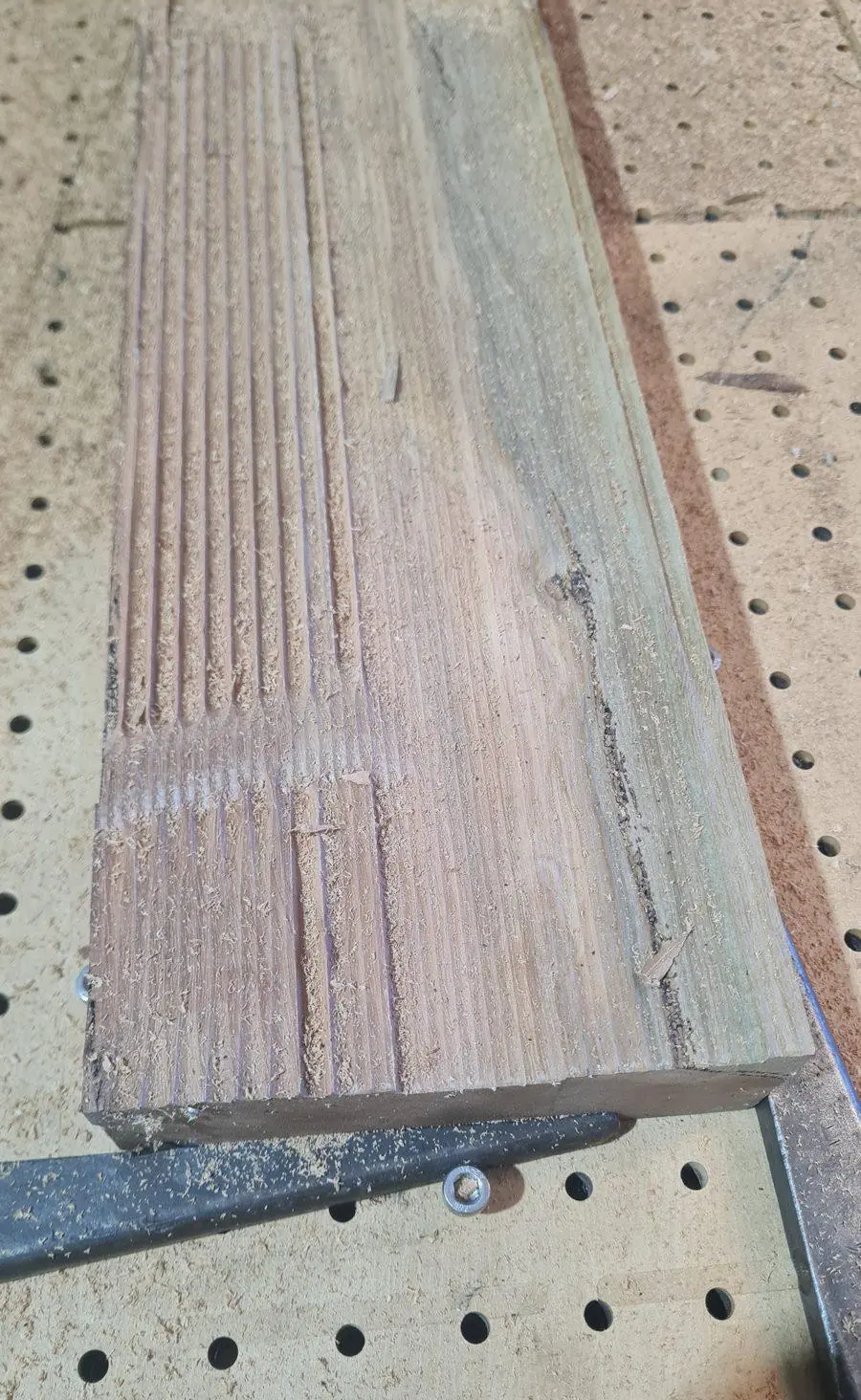
Reclaimed hardwood is what we are cutting now
Most of the router time at the moment goes into old material — hardwood beams out of demolished buildings, and old decking timber. It comes in filthy, hard as anything, and full of nail holes and old fixings.
Flattened and profiled, that timber turns into bench tops, shelves, mantels, feature boards and table tops that you cannot buy new. It has a colour and a hardness in it that fresh-sawn timber does not have.
Two things to know before you bring it in. Get the metal out, or tell us where it is — a hidden nail or a screw will destroy a cutter and mark your timber. And old timber moves once you cut into it, because you are releasing tension that has been in the beam for decades. We can flatten it perfectly and it may still want to shift a little afterwards. Anyone who tells you otherwise has not cut much of it.
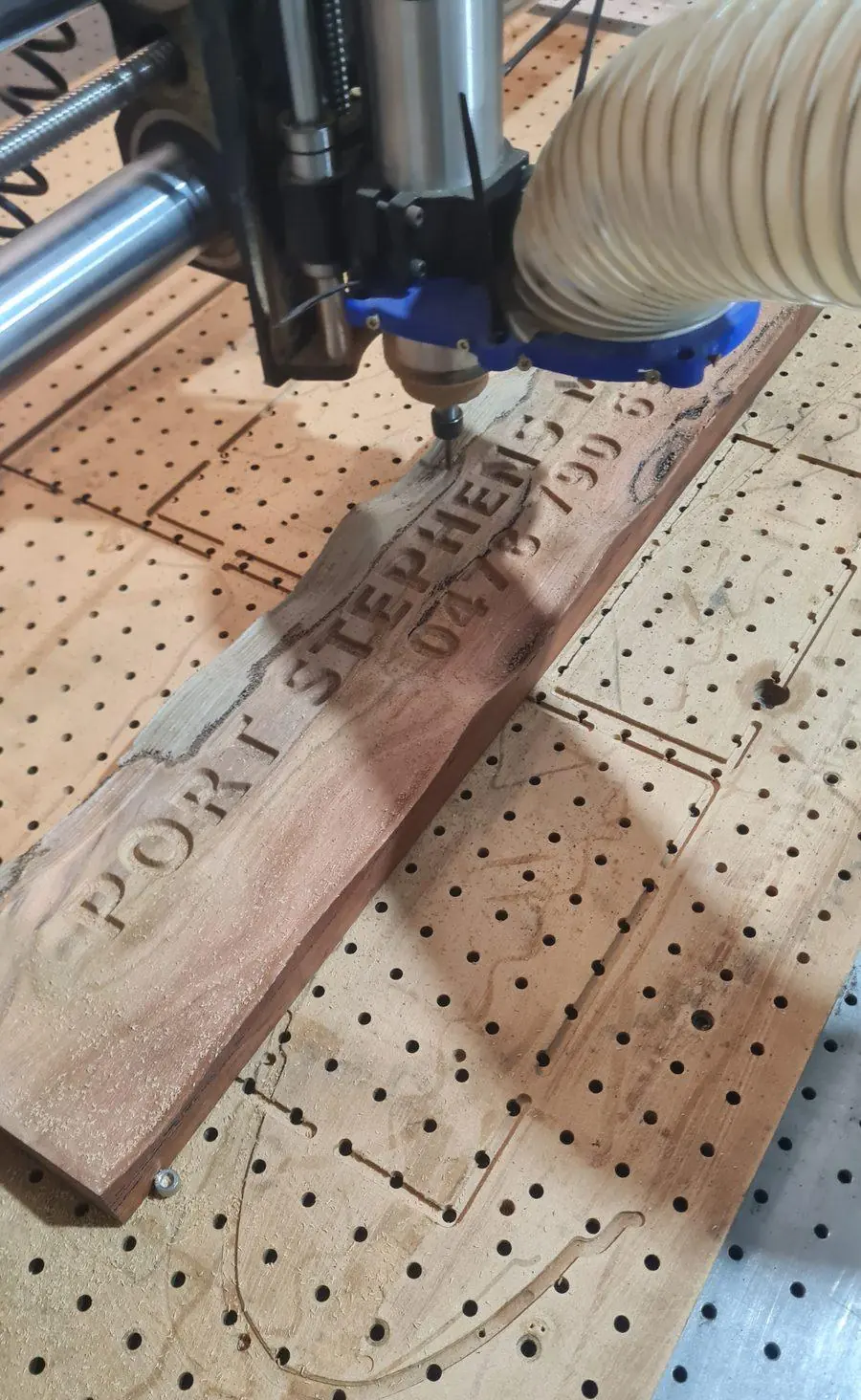
Why the program gets checked first
Slabs are one-offs. There is no second one of your grandfather’s fence post or the beam out of the old woolshed.
Every program is simulated and gouge-checked before the cutter runs — the whole job watched on screen, looking for a pass that drops too deep, a cutter that clips a clamp, or a retract that does not clear a high spot. On material you cannot replace, that check is the difference between a bench top and firewood.
We also model the profile in Fusion 360 before we cut it, so you see the edge shape on screen and can change it while changing it is free.
What to tell us
- Rough length, width and thickness — a photo with a tape measure laid across it is perfect
- Whether it is green, air-dried or old and dry
- What it is going to be — a bench top gets treated differently to a mantel
- Whether there is any metal in it, and where
The bed takes slabs up to 1200 × 800mm in one setup. Longer slabs can be stepped along the bed and indexed — ring and we will tell you whether yours will work. A 3 tonne forklift does the lifting.
We flatten and machine. The slab leaves here flat, parallel and to thickness, straight off the router; sanding and finishing are yours to do.
Related router work
Want a carving in the finished slab? See 3D relief panels and carvings. Want a name or a property sign cut into it? See carved signs and lettering. Everything the router does is on the CNC routing hub.
Photograph the slab with a tape measure on it. One shot down the length and one across the width is enough. Tell us what you want it to become and whether there is any metal in it. We will tell you what it will take. Ring 0478 790 631 · Mon–Fri · 12 George Road, Salamander Bay. Or use the quote form.