Stainless boat fittings and rails, made in Port Stephens
Rails get bent. Somebody backs into a pylon, a rail takes the weight of a big bloke coming aboard in a swell, or twenty years of salt finally finds the inside of a tube.
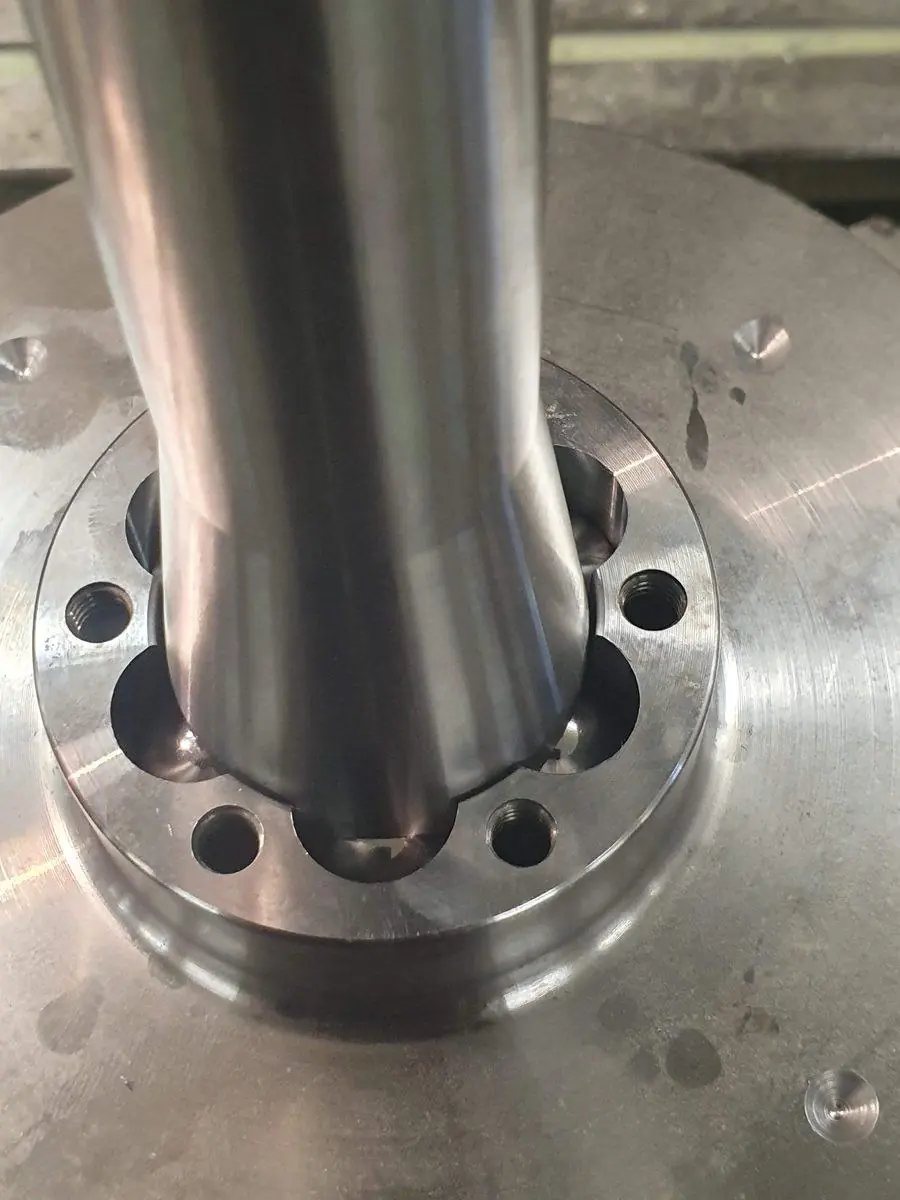
We make and repair stainless boat fittings at Salamander Bay — machining and fabrication here, welding through the welders we work with.
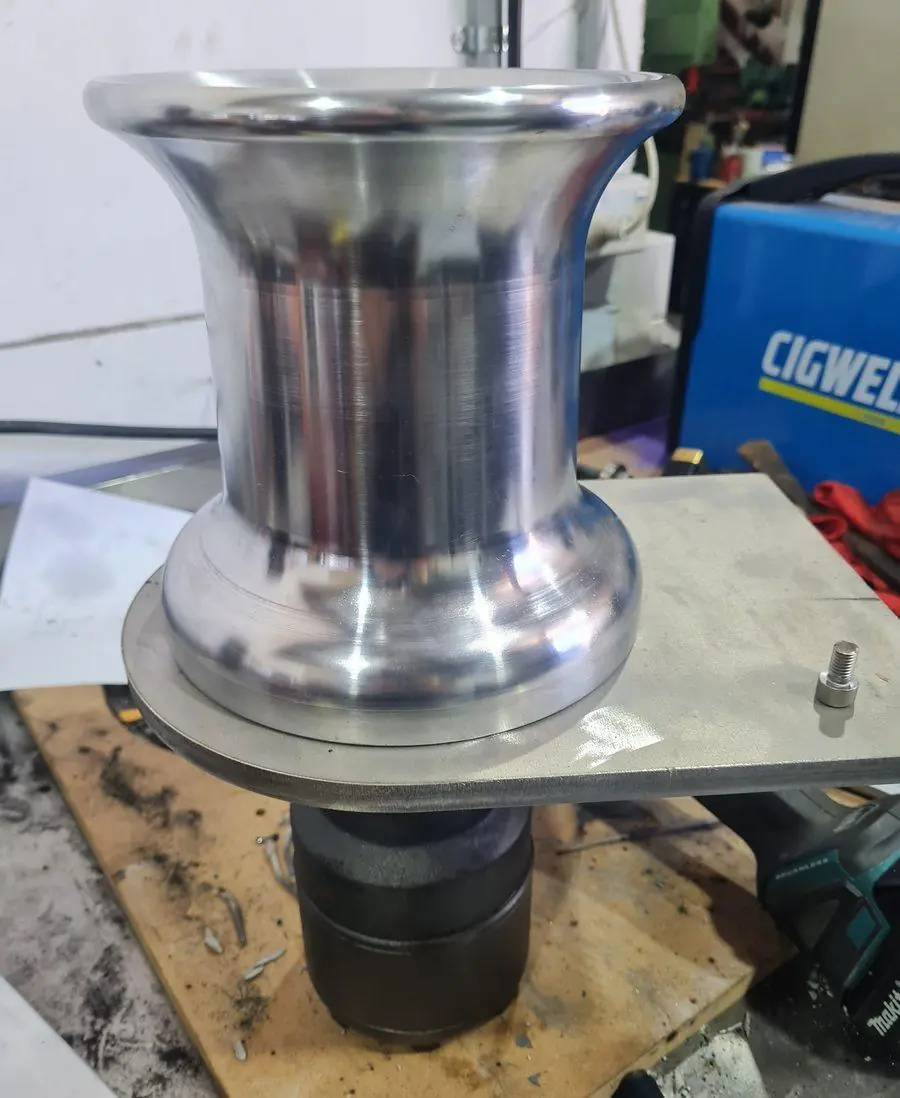
What we make and repair
- Bow rails and stern rails — repaired, re-made to match, or built new to suit the boat
- Grab rails and hand rails
- Rocket launchers — new frames, extra rod holders, repairs to cracked joints
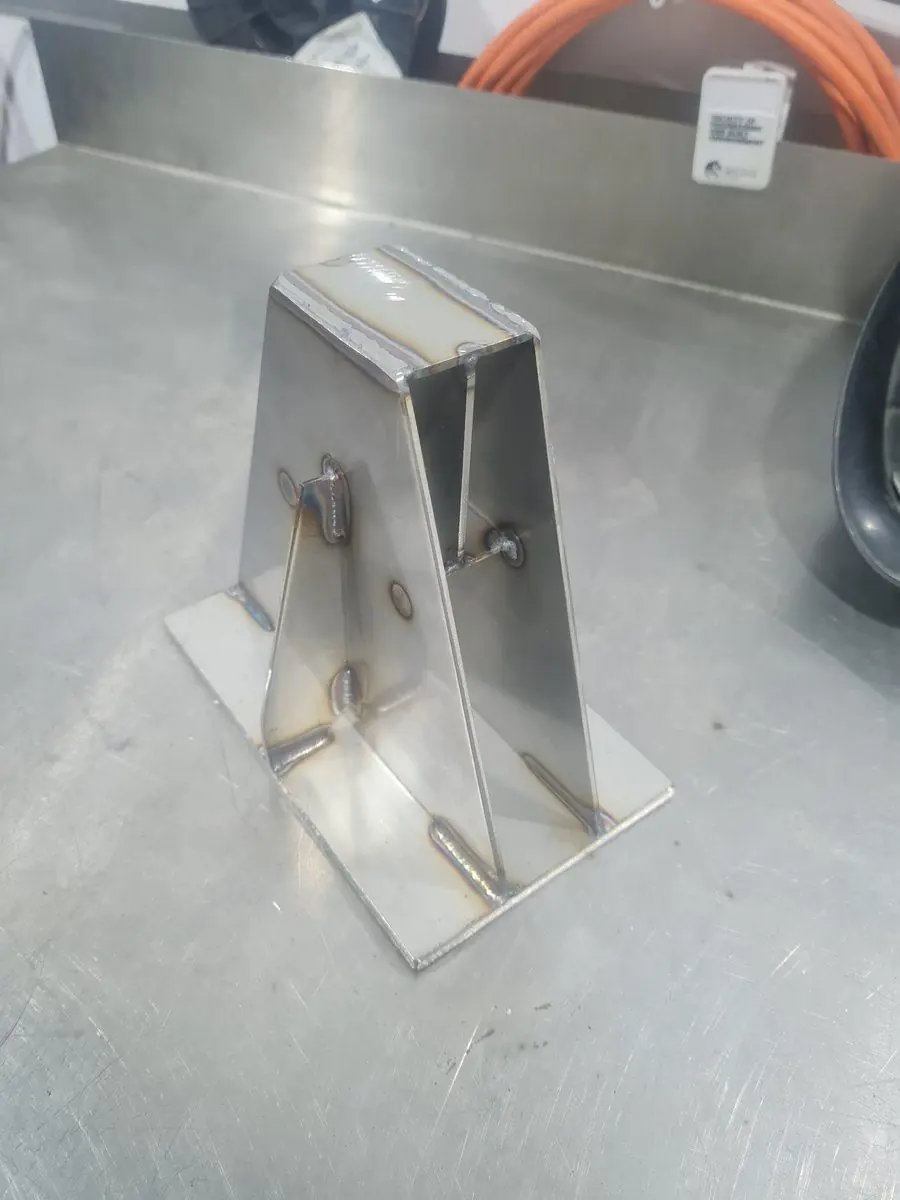
- Bait boards and bait board frames — including the mounts, which are usually what fails
- T-top frames and canopy frames — made in one piece. Very long rails come in sleeved sections where that is the better job
- Boarding ladders and swim ladders
- Guard rails and stanchions
- Custom brackets — sounder, transducer, aerial, downrigger, rod holder, davit, anything that needs to bolt to something else and stay there
If you’ve got a fitting that’s obsolete and there’s no drawing for it, bring us the broken one. Reverse engineering from a sample is normal work for us — we measure the part, model it in Fusion 360 and machine a new one.
Why 316, and why it matters here
Stainless is not one thing. The two grades you’ll run into are 304 and 316.
304 is the general-purpose grade. It’s everywhere — kitchens, handrails, sheds. It’s fine inland.
316 has molybdenum in it, and that’s what makes it hold up against chloride — salt. In Port Stephens, that’s the whole game. Every fitting on your boat lives in salt spray, and a lot of them sit wet for days.
Put 304 on a boat in this water and you’ll see tea-staining inside a season and pitting behind it. Pitting is the one that matters, because it doesn’t stay on the surface — it works into the metal, and it likes to do it where you can’t see, inside a tube or under a fitting.
We use 316 for marine work. If a job doesn’t need it, we’ll say so and save you money. If it does, we won’t substitute.
Tea-staining is not necessarily failure
Worth saying, because people panic about it. Brown staining on 316 in a marine environment is usually surface contamination, not the stainless failing. Fresh water and a wipe-down after a trip does more for your rails than anything else. If it’s pitting rather than staining, that’s different — get it looked at.
Matching an existing rail
Most rail repairs are a match job: we need the new section to sit exactly where the old one did, at the same rake, with the bolt holes landing on the existing holes. Bring the rail off the boat if you can. If it can’t come off, we’ll come and measure it — no call-out charge around Port Stephens, and we travel out to Newcastle, Beresfield and Thornton.
Polish
We supply rails and fittings in a brushed finish or mirror polished, as you prefer. Electropolishing for food or medical work is arranged through a specialist and managed as part of the job.
Send a photo of the rail. Include one shot of the whole rail and one of the damaged section, plus a rough length if you can get a tape on it. Ring 0478 790 631 · Mon–Fri · 12 George Road, Salamander Bay.