3D relief panels and carvings
A relief carving is a picture cut into a board so the subject stands proud of the background. Done properly the animal has real depth in it — a raised back, a rounded head, a tail that lifts off the timber.
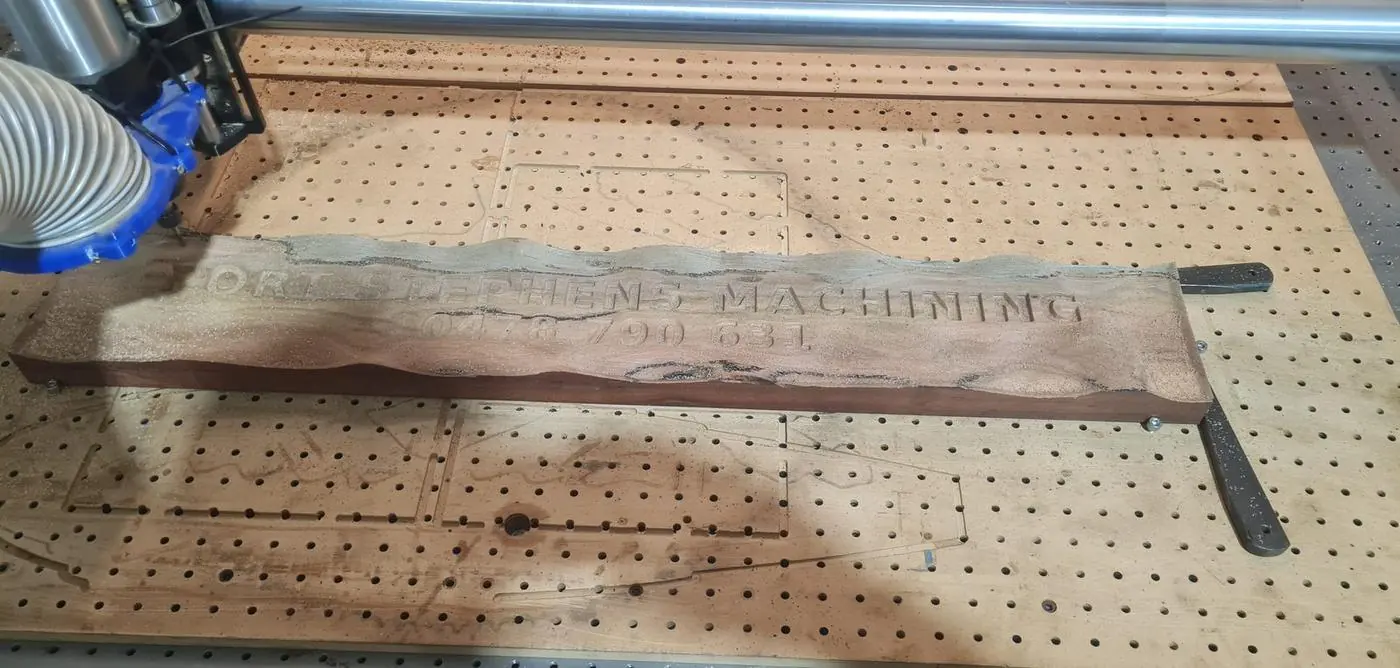
We carve relief panels on the CNC router at Salamander Bay, most often Australian wildlife, and just as often somebody’s own artwork.
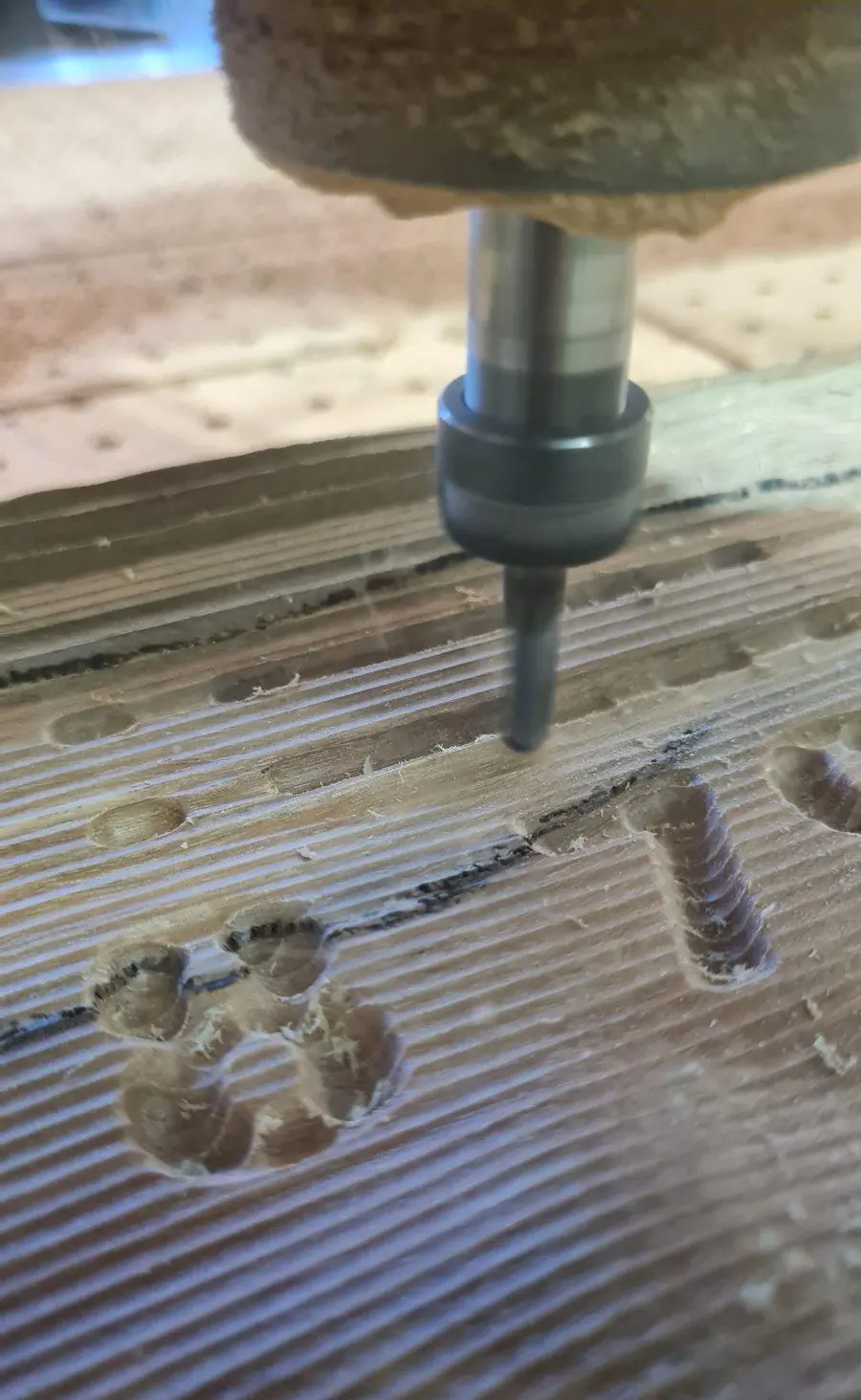
Australian wildlife
This is the work we set the machine up for.
- Goanna — the one people ask for most, usually walking along a long board
- Barramundi — and other fish, scales carved in rather than drawn on
- Kookaburra — and other birds, on a branch or on a plain ground
- Lizards and geckos — small panels, good on a narrow board
- Snakes — coiled or running the length of a plank
- Echidna — spines carved individually, which is where the machine earns its money
Other species can be modelled. Tell us what you want and we will say whether it will carve at the size you have in mind.
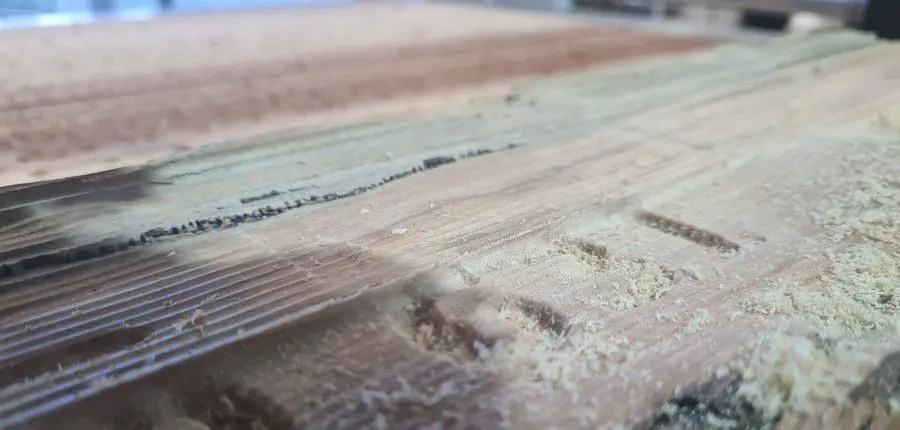
Carved proud of a textured background
The background matters as much as the animal. A flat, sanded background makes a carving look like a sticker. We cut a texture into the ground behind the subject — a worked, tooled surface that catches light and pushes the animal forward.
The subject is then carved to stand out of that ground, with the edges cut clean so the outline reads from across the room.
Custom artwork
Not everything has to be an animal. Send a drawing, a tattoo design, a club logo, a boat, a bike, a portrait outline, a property name with a scene behind it. It gets modelled in Fusion 360 here.
Some images translate to relief and some do not. A photo with a lot of fine detail and no clear light and shade will not carve well — there is nothing for the cutter to make depth out of. We will tell you that up front rather than take your money and hand you a muddy board.
Why this work needs a checked program
A relief carving is a long job. There is a roughing pass that takes the bulk out, then a finishing pass that follows the shape of the model with a small ball-nose cutter, and that finishing pass runs for hours.
If there is a fault in the program, it shows up on the finishing pass — at the end, on a board you have already put a day into. That is why every program here is simulated and gouge-checked before it runs. The toolpath is watched all the way through on screen first, looking for the cutter dropping where it should not or the tool holder touching a raised edge.
Proven programs, not hopeful ones. On a one-off board that has come out of your own property, that is the whole job.
Size and timber
Big panels are what the machine is built for, and a board longer than the table can be stepped along and indexed. The bed is 1200 × 800mm.
Hardwood carves the crispest and holds fine detail. Softwoods carve faster and cost less but soft grain will tear on very fine work. Reclaimed hardwood makes the best-looking panels of the lot, and it is what we are cutting most of at the moment — see timber slab and reclaimed hardwood work.
Panels come either way: finished — sanded, oiled and with a keyhole or French cleat on the back ready to hang — or raw off the machine for you to finish yourself. Say which when you order; the price is different.
Related router work
Lettering carved into a board, on its own or alongside a carving, is covered on carved signs and lettering. Everything else the router does is on the CNC routing hub.
Send a photo of the board and tell us the animal. If you have the timber already, photograph it with a tape measure across it. If you have artwork, send that too. We will tell you whether it will carve at that size and what it will look like. Ring 0478 790 631 · Mon–Fri · 12 George Road, Salamander Bay. Or send it through the quote form.