Aluminium boat repairs in Port Stephens
Aluminium boats crack. Usually it starts as a hairline at a chine, a rib end or a corner of the transom, and it gets found when the bilge pump starts running more than it used to.
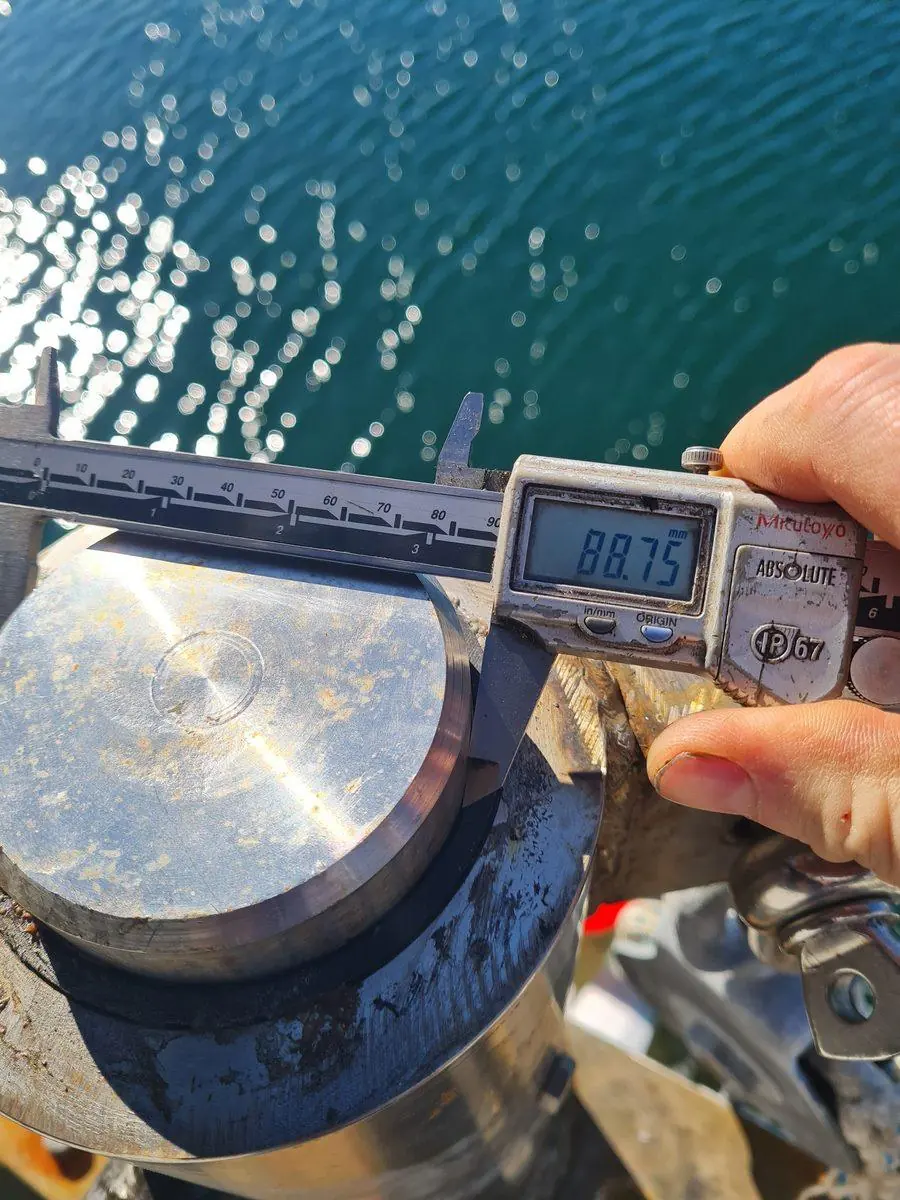
We repair aluminium hulls, transoms and structure out of the Salamander Bay workshop. Machining, fitting and fabrication is ours; the welding is done by the welders we work with. You deal with us the whole way through.
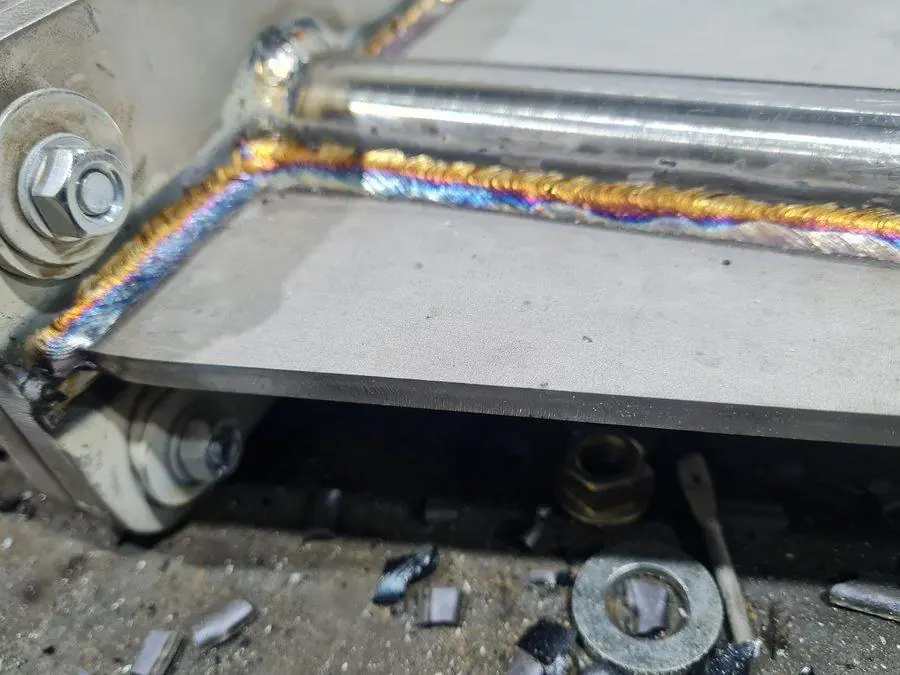
What we repair
- Cracked hull plate — chines, strakes, rib ends, corners around fittings. Cracks nearly always start at a stress point, not in the middle of a panel.
- Transom repairs — corroded or fatigued transoms, splits around the motor bolts, transom reinforcement plates and knees.
- Splits and seam failures — old welds that have let go, seams that have opened up.
- Dents and deformed plate — from a trailer roller, a pylon or a shallow rock.
- Corroded sections cut out and replaced — new plate let in where the old plate is past saving.
- Bracket, mount and fitting repairs — where a fitting has torn out and taken plate with it.
Why marine aluminium is different
There’s a big difference between marine-grade aluminium and the general-purpose stuff sold at a metal supplier.
Marine grades — 5083 and 5052 — are magnesium alloys. They hold up in salt water, they weld properly, and they keep their strength at the weld. Boat hulls are built from them for exactly that reason.
Common general-purpose grades like 6061 behave differently. They’re stiffer and they machine beautifully, but they don’t take kindly to being welded into a wet, flexing, salt-soaked hull, and a repair made in the wrong grade can crack again right beside the weld.
So the first thing we work out is what your hull’s actually made of. If it’s a plate boat we’ll usually know from the builder. If it’s older or unmarked, we’ll match it as best we can and tell you what we’ve assumed.
5083 plate in 3, 4, 5 and 6mm is readily available to us, and thicker if the job needs it. We do not carry a plate stock, so allow a couple of days for material on a repair that needs new plate.
The other thing that kills aluminium boats
Galvanic corrosion. Aluminium and stainless don’t get on when there’s salt water between them. If you’ve got a stainless fitting bolted straight to an aluminium hull with no isolation, the aluminium is the one that gives up.
If we’re repairing corrosion around a fitting, we’ll tell you if that’s what caused it — otherwise you’ll be back in two years with the same hole.
What it costs and how long
Every crack is different, so we won’t put a price on this page. What we can do is look at a photo and tell you honestly whether it’s a two-hour job or whether the boat has reached the end of the road. Some do.
Our machines run overnight, so machined components for a repair — a mount, a plate, a bush — usually don’t hold the job up.
Bring it on the trailer
Trailer boats come to us on the trailer, straight into George Road, Salamander Bay. Monday to Friday. No Saturdays — we’re a two-man shop and the machines don’t run themselves on weekends.
Photograph the crack. One close-up, one from a couple of metres back. Send them through with the make and model of the boat and we’ll tell you whether it’s worth repairing. Ring 0478 790 631 · Mon–Fri · 12 George Road, Salamander Bay.